
Scotland in Festival Season
Every August, Edinburgh becomes the busiest cultural stage in the world, and the whole creative spirit sweeps into one city in a way no other gathering matches. And it does it in the country where the Highlands rise in wild majesty, a place that invites you to stay, explore, and take the long way there.
THE MOMENT
One City, the Whole Creative World
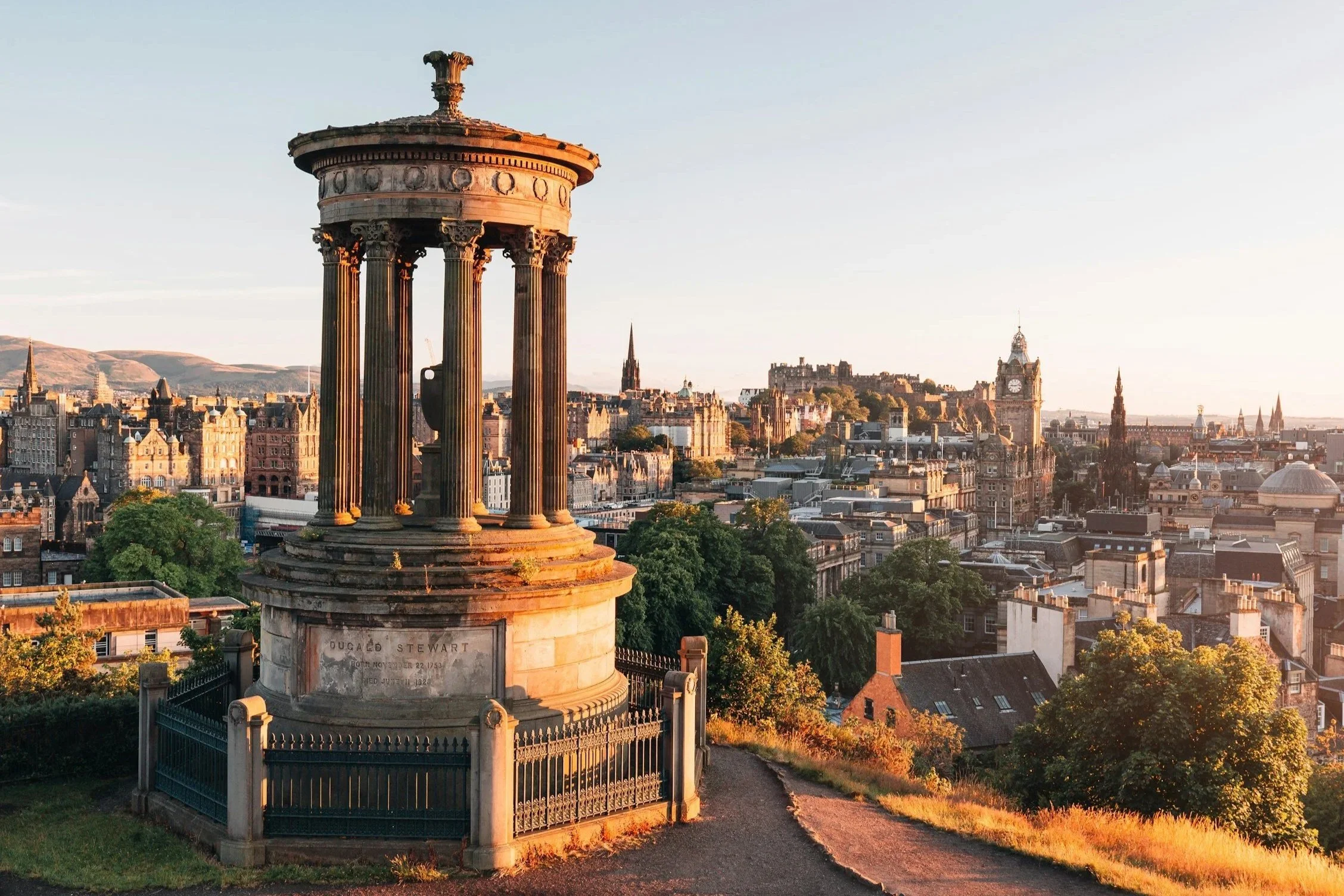
For most of the year Edinburgh is a charming and ancient northern capital, the political and commercial center of Scotland with a beauty and grace that is rarely matched. For one month every August though, it is the busiest cultural stage on earth. The Edinburgh International Festival brings the leading orchestras, opera houses, and theatre companies of five continents into the city's grandest halls. The Fringe, the largest arts festival in the world, fills every other room in town with comedy, theatre, cabaret, and music, more than three thousand shows across hundreds of stages. Each evening the Royal Edinburgh Military Tattoo plays out on the floodlit esplanade of Edinburgh Castle. Around them run the Book Festival, the city's galleries in their summer shows, and folk, jazz, and contemporary music in every cellar and courtyard, until the whole place feels like one continuous event.
It is more than anyone could see in a single visit, and that is the point: the city rewards a plan. Our recommendation is to build Edinburgh in as the finale, not the curtain-raiser. Begin your journey through Scotland in the Highlands, where the pace is slow and the landscape tells the story, then arrive in the capital with the festivals at full tilt, the last and loudest movement of a grand performance.
Orchestrating this is our specialty. The hotels, the guides, the routing, and the best seats in the house are what we pull together.
7 – 30 AUGUST 2026
The Edinburgh International Festival
The 2026 programme is built around a single idea: America, 250 years after the Declaration of Independence. Festival Director Nicola Benedetti has assembled an unusually strong year, and several of its anchors will not come around again. A selection of what we would plan around:
OPENING WEEKEND • 7–9 AUGUST
All Rise — Wynton Marsalis
The Festival opens with Marsalis's twelve-movement jazz symphony, performed by the Jazz at Lincoln Center Orchestra with the Royal Scottish National Orchestra and the Edinburgh Festival Chorus. More than 200 performers on one stage, and the work that gives the whole Festival its theme.
WEDNESDAY, 12 AUGUST
Yuja Wang with the Jazz at Lincoln Center Orchestra
A Festival commission and a world exclusive: the classical pianist of her generation in a programme selected with Marsalis and arranged for her alone. Two performances, one evening.
14–16 AUGUST
Los Angeles Philharmonic and Gustavo Dudamel
A full residency at the Usher Hall in Dudamel's seventeenth and final season as the LA Phil's music director, before he leaves for the New York Philharmonic. Three concerts: Beethoven's Sixth and Seventh symphonies, the UK premiere of Gabriela Ortiz's Grammy-winning Revolución diamantina, and Thomas Adès's Inferno, a setting of Dante. A partnership at its end, heard live.
FESTIVAL RUN
San Francisco Ballet — Mere Mortals
The company's first Festival visit in 22 years, with the European premiere of a ballet asking urgent questions about artificial intelligence.
FESTIVAL RUN
Angels in America — Internationaal Theater Amsterdam
Ivo van Hove's staging of Tony Kushner's epic, with both parts combined into a single performance and a David Bowie soundtrack. Kushner has called it his favorite version of the play.
29–30 AUGUST
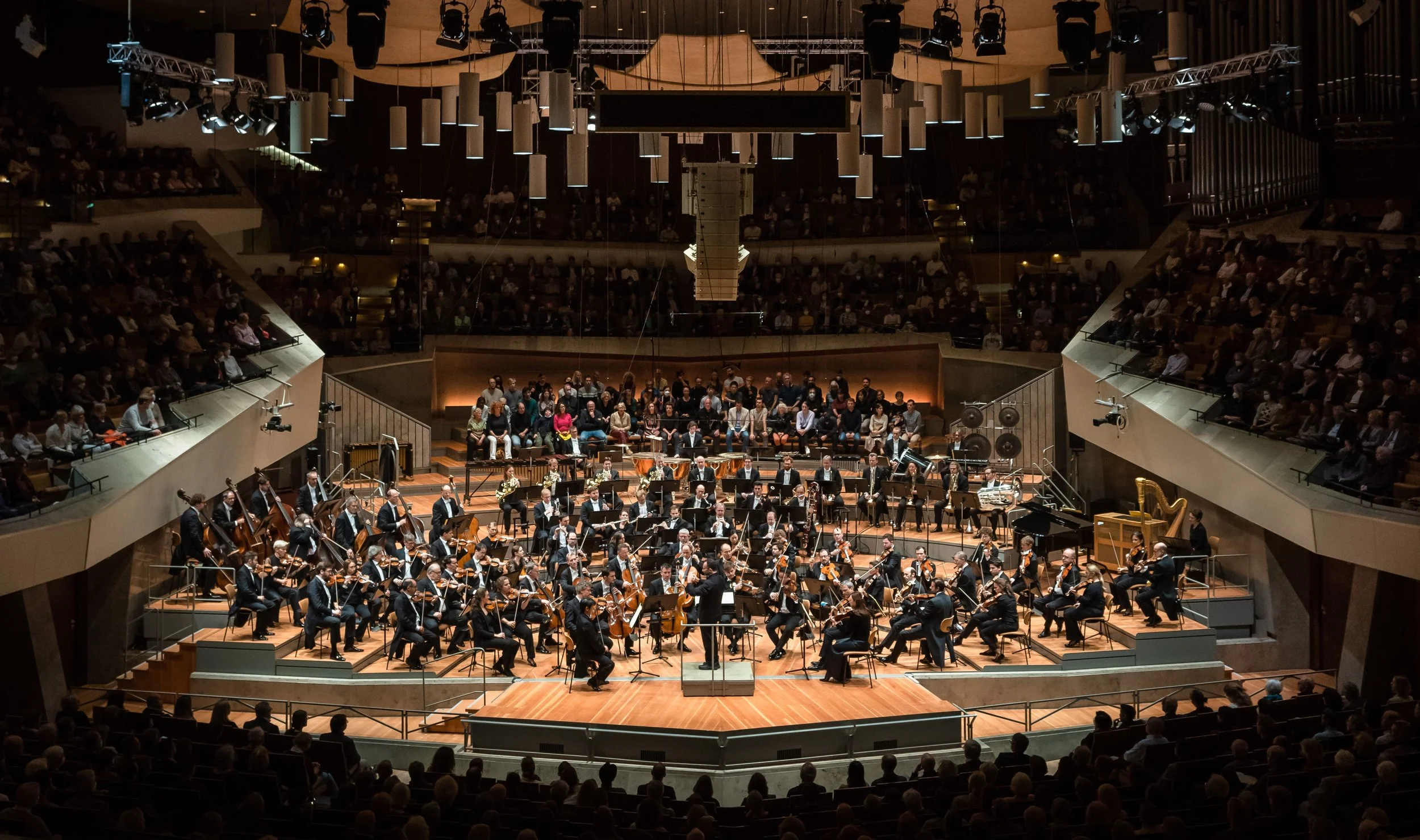
Berliner Philharmoniker closes the Festival
Kirill Petrenko conducts two nights to end the month: Elgar and Tchaikovsky, then Beethoven's Violin Concerto with Augustin Hadelich. The programme already lists both as limited availability.
Around the headline evenings sits one of the Festival's quiet pleasures: the 11am recitals at The Queen's Hall. Sheku Kanneh-Mason, Paul Lewis, and Pierre-Laurent Aimard all appear this year, and a morning concert followed by a long lunch is one of the most civilized ways to spend a festival day.
7–29 AUGUST 2026
The Royal Edinburgh Military Tattoo
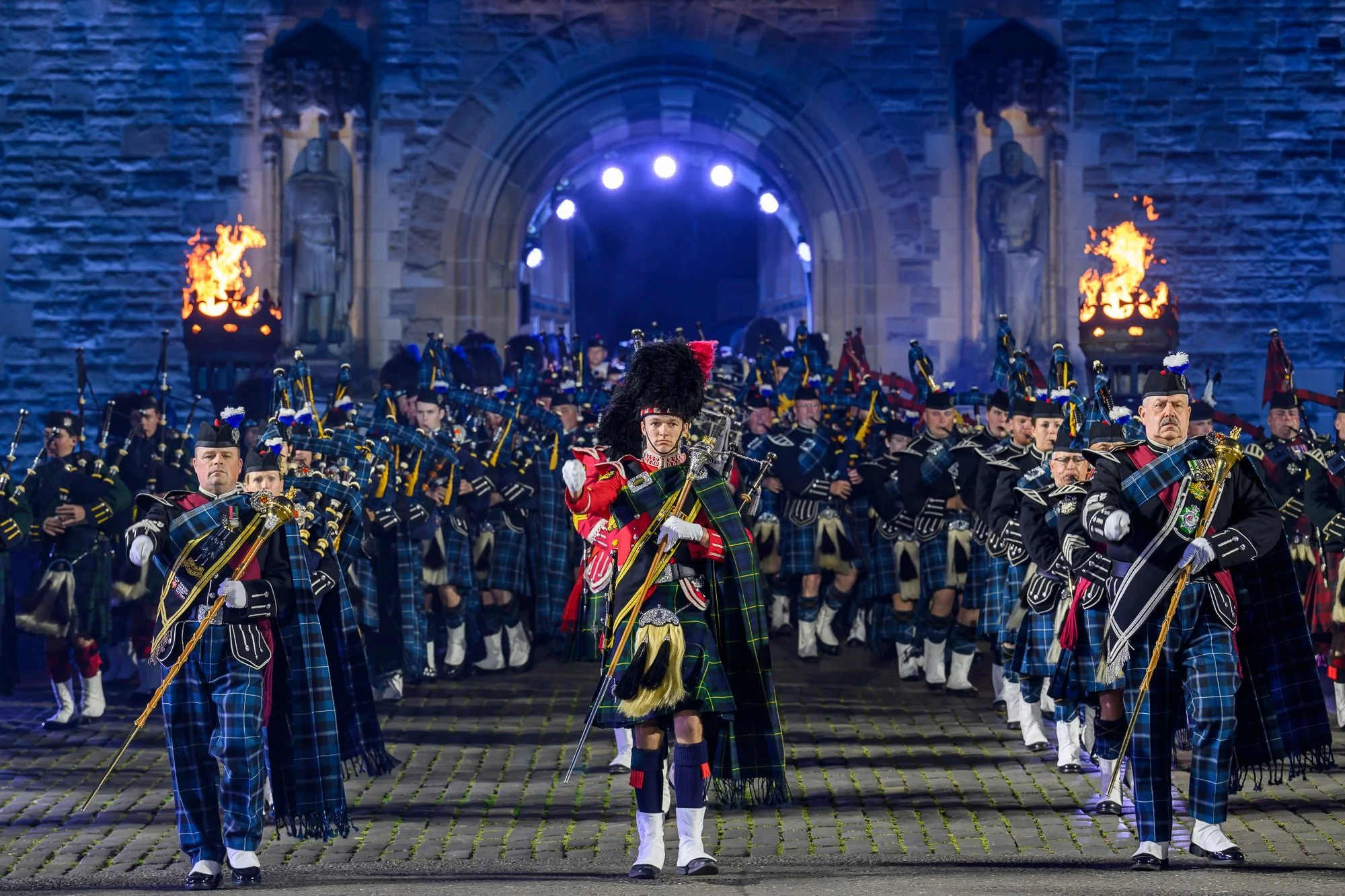
This year's show, A Call to Gather, is built around the Scottish tradition of the gathering of the clans, with the Royal Air Force as lead service and more than 800 performers from Germany, New Zealand, Qatar, the United States, and across the UK. Massed pipes and drums on the castle esplanade, the lone piper on the ramparts, fireworks over the city.
When we seat clients for the Tattoo, it is in the premier sections directly facing the castle. Seating category matters more here than at almost any other event, and it is consistently the night travelers talk about most when they return.
The massed pipes begin in darkness, the castle lights, and nine thousand people go quiet at once.
THE DEEPER PROGRAM
Beyond the Headliners
The big evenings give a festival trip its anchors. The smaller programme gives it a daily rhythm, and 2026 is unusually rich at this scale. Most of these performances are priced between £10 and £35, and they stay available well after the headline concerts have sold.
Opera and dance beyond the marquee
The Scottish Chamber Orchestra continues its acclaimed Mozart series in concert with Don Giovanni under Maxim Emelyanychev at the Usher Hall (16 August), and the BBC Scottish Symphony Orchestra performs Strauss's Elektra (23 August). In dance, Sidi Larbi Cherkaoui's Ihsane arrives in its UK premiere with North African and Middle Eastern musicians playing live on stage (18 to 20 August), and When Prophecy Fails, from Scottish ensemble Groupwork, turns the true story of the world's first UFO doomsday cult into hypnotic dance theatre (27 to 30 August).
Theatre in smaller rooms
This is where the Festival rewards curiosity. A Deaf and hearing cast reimagines Chekhov’s The Seagull in Flemish Sign Language (8 to 11 August). Mario Banushi's wordless Taverna Miresia unfolds inside his late father's Albanian restaurant (26 to 29 August). Haribo Kimchi seats the audience at a late-night Korean snack bar (20 to 24 August), Ingoma! brings Rwanda's first professional women's drumming troupe to the Lyceum (14 to 16 August), and Pulitzer finalist Zora Howard makes her directorial debut with HANG TIME (20 to 23 August).
Music at close range
The Queen's Hall morning recitals run at 11am nearly every day: Dunedin Consort premieres Tansy Davies's Passion of Mary Magdalene (8 August), guitarist Sean Shibe plays five centuries of Spanish and British music (13 August), Sheku Kanneh-Mason joins the Kleio Quartet for Schubert's String Quintet (19 August), and the Pavel Haas Quartet closes the run (28 August). Alisa Weilerstein performs all six Bach Cello Suites in a single afternoon (22 August). Late nights belong to The Hub, the Festival's home on Castlehill, where a welcome drink comes with the ticket: American fiddle duo Mark and Maggie O'Connor (13 August), the oud, buzuq, and kora trio Beyond Tradition (21 August), and Classical Jam, where Nicola Benedetti and the audience choose the repertoire together. The Usher Hall beanbag concerts are their own pleasure; Jordi Savall's A Sea of Music (25 August) and Colin Currie's all-Steve Reich programme with a world premiere (28 August) are the two we would point to.
Free, daytime, and for families
The Legacy Museum of Montgomery, Alabama mounts its first international exhibition, The Legacy of Slavery, at the University of Edinburgh's Playfair Library (8 to 30 August, free). Together We Rise fills Princes Street Gardens with Scottish and American music and dance on the opening Sunday (9 August, free).
This is how a festival day takes shape: an 11am recital at The Queen's Hall, an exhibition or a Fringe show in the afternoon, the Tattoo or a headline performance in the evening, and a 10pm concert at The Hub if the night still has life in it. Holding that rhythm, day after day, without it ever feeling crowded, is the work, and it is the same judgment we bring to the days and the journey that come before Edinburgh.
THE ROUTE
Inverness to Edinburgh
Scotland in August is at its best, with long daylight, heather coming into bloom, and the Highlands genuinely warm. We route this trip as a single arc, west to east, so the country builds toward the capital and the festivals arrive as the finale rather than the opening act. One rule governs the pacing: every base earns at least two nights, because a trip that repacks every morning stops being a trip and becomes logistics.
01 – TWO NIGHTS
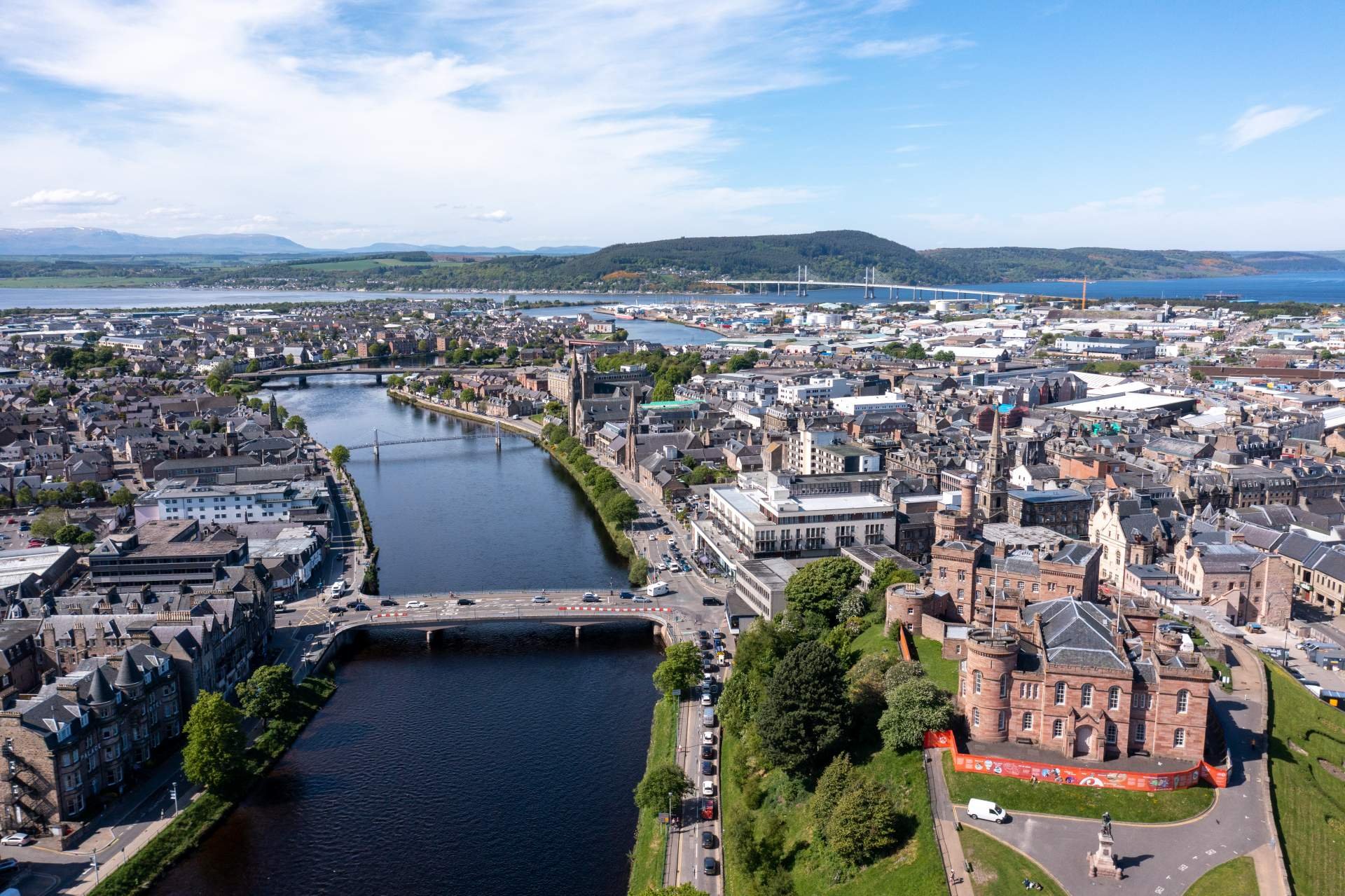
Inverness and the Inner Highlands
Fly into Inverness and begin where Highland history concentrates. Culloden's moor and the Bronze Age cairns at Clava sit ten minutes apart, Loch Ness and Urquhart Castle are half an hour south, and the first distillery visit is never far. Two nights is right; the city is the doorway, not the destination.
02 – TWO NIGHTS
Wester Ross and the North Coast 500
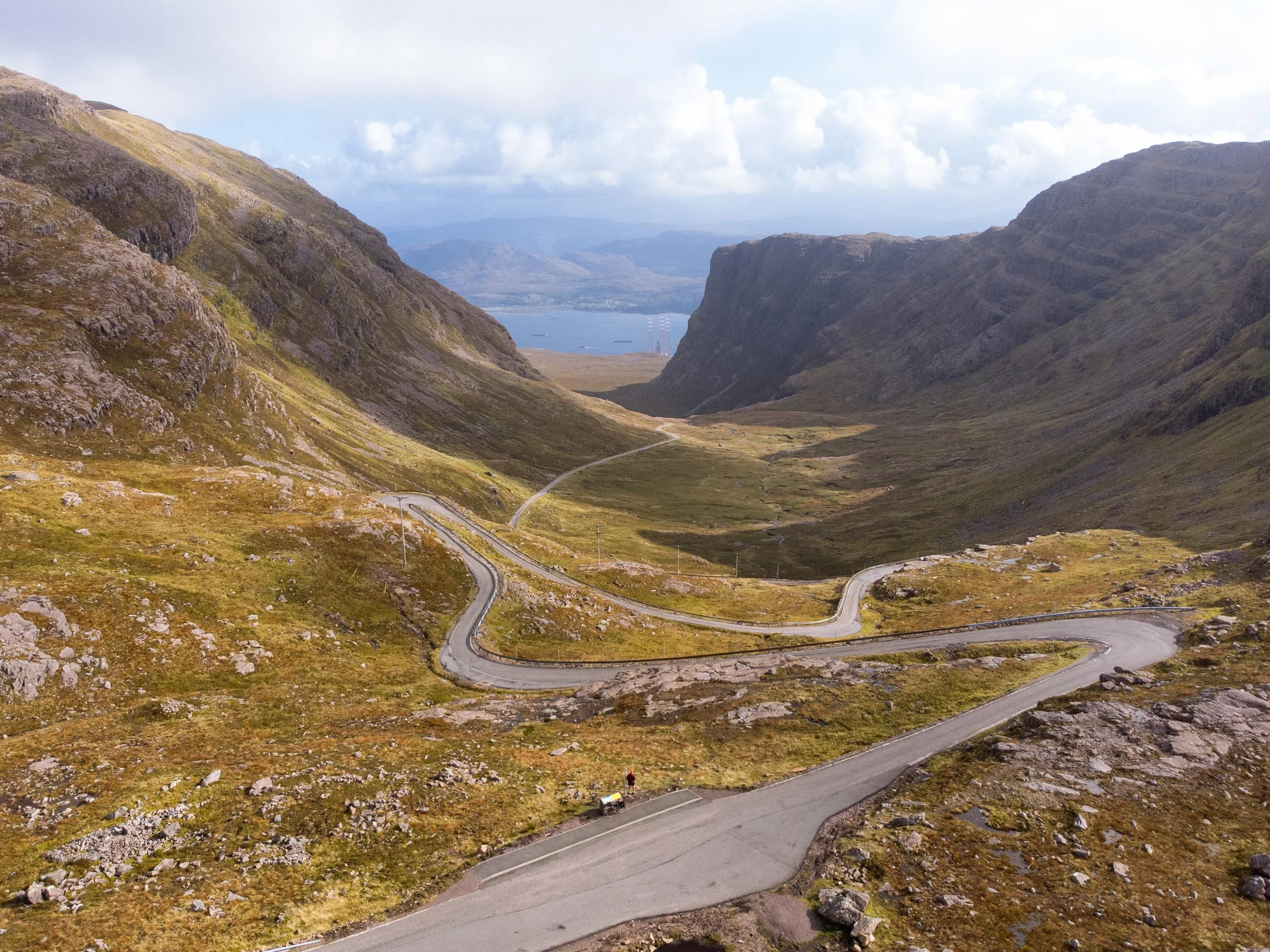
Head west on the quietest and most dramatic stretch of the North Coast 500, where the road narrows to a single track and the Torridon mountains rise straight out of their sea loch. Loch Maree, the ancient pinewoods of Beinn Eighe, and the hairpins of the Bealach na Bà over the Applecross peninsula. Travelers with more time can push north into Assynt and Ullapool; either way, this leg is the reason to fly into Inverness rather than Edinburgh.
03 – THREE NIGHTS
The Isle of Skye
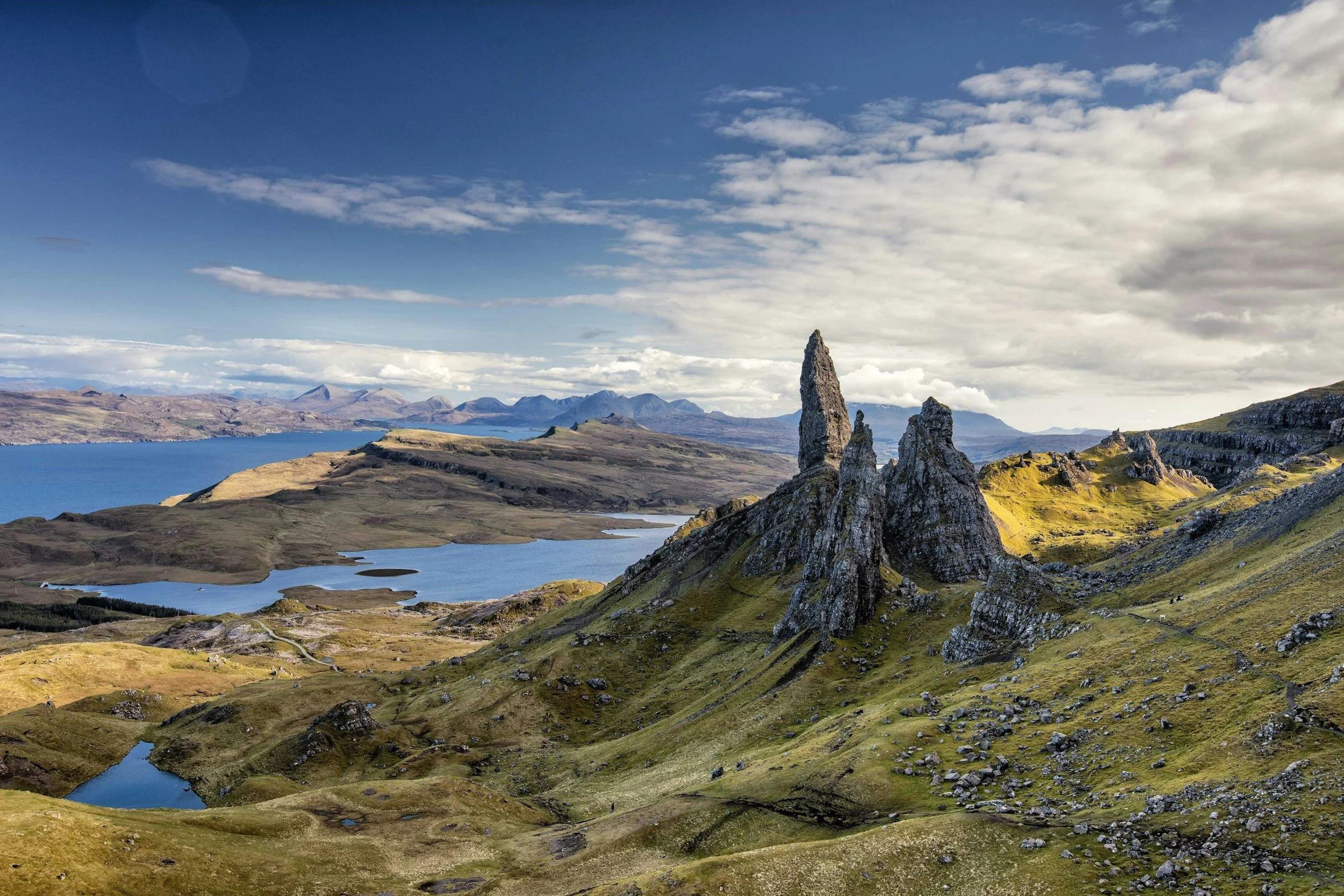
Cross by the coast road past Eilean Donan and over the Skye Bridge. The Trotternish loop holds the Old Man of Storr, the Quiraing, and Kilt Rock; the Cuillin and the Fairy Pools fill a second day; Portree's harbor front takes care of the evenings. We recommend three nights; fewer and the island becomes a drive-through.
04 – TWO NIGHTS
Lochaber: the Road to the Isles and Glencoe
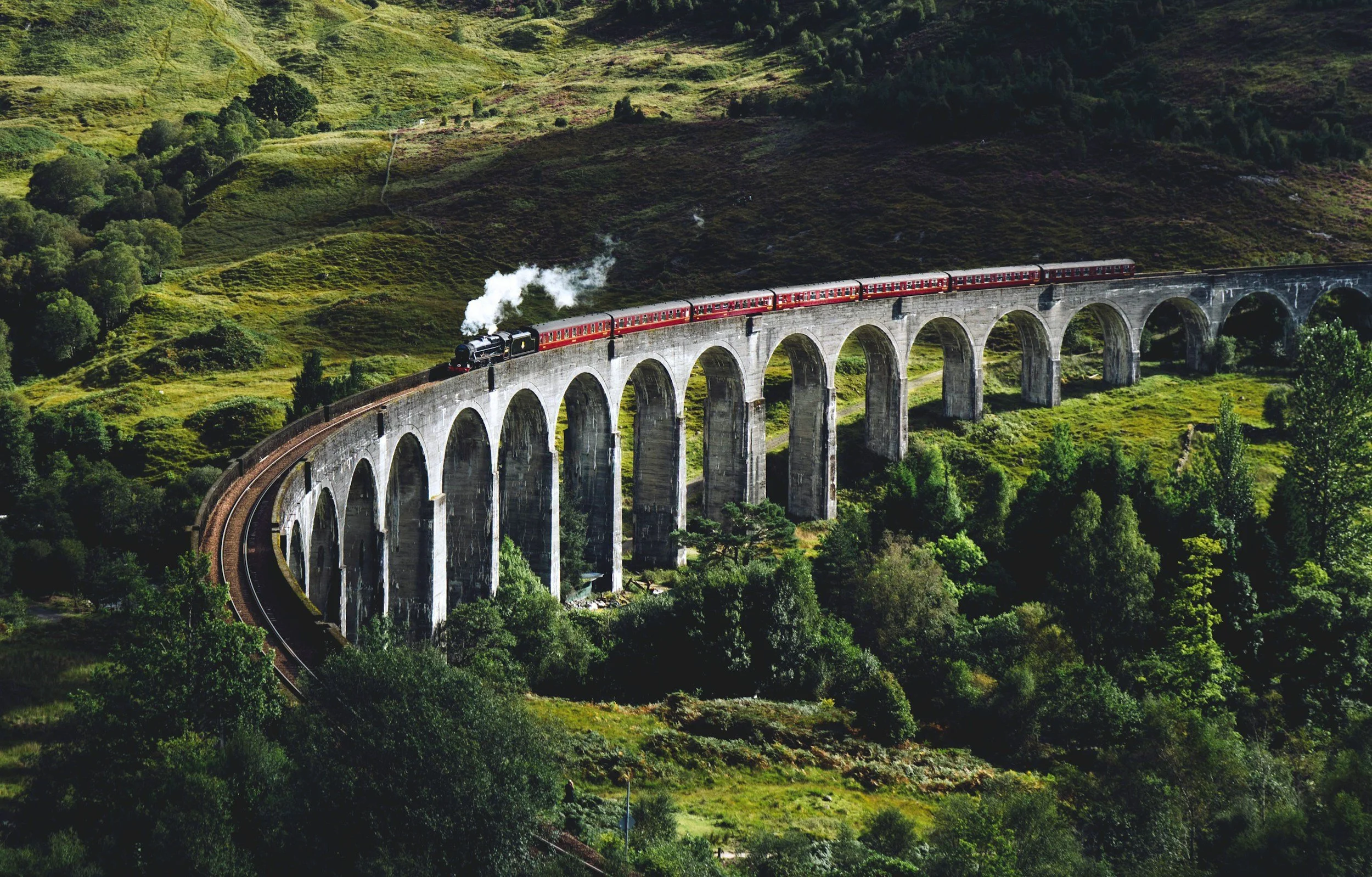
Leave Skye the elegant way: the short ferry from Armadale to Mallaig, then the Road to the Isles past the Glenfinnan Viaduct and Loch Shiel, arriving in Glencoe by evening. The second day is the reason to stay: Glen Etive's single-track road, the walk into the Lost Valley where the MacDonalds once hid their cattle, Steall Falls beneath Ben Nevis. The most storied glen in Scotland deserves better than a windshield.
05 – EN ROUTE, OR TWO NIGHTS
The Drive East. Done Properly
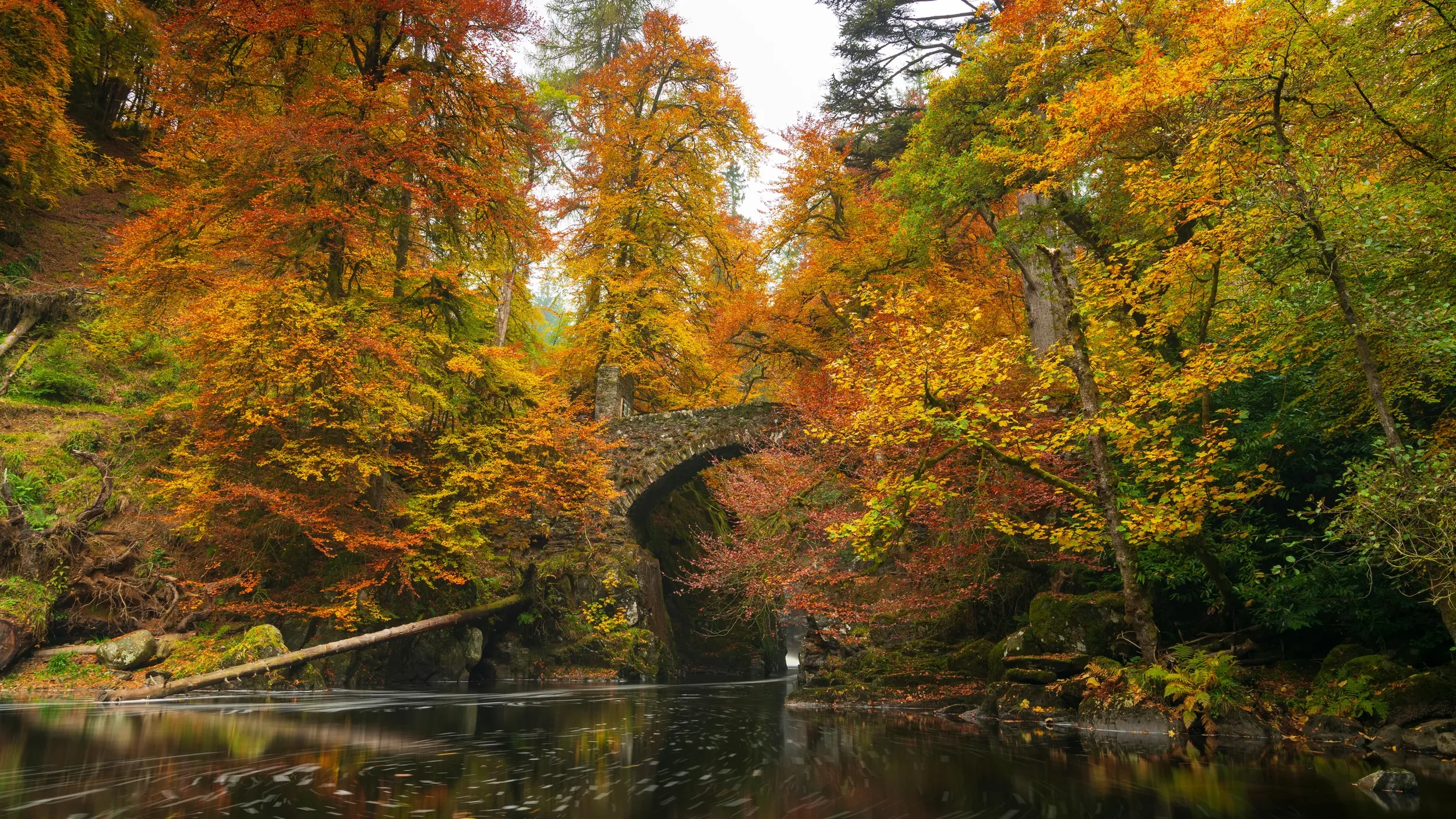
The run to Edinburgh crosses Rannoch Moor and drops through Highland Perthshire, where The Hermitage at Dunkeld earns the stop: a short woodland walk through towering Douglas firs to a folly above the Black Linn Falls. Done this way, the drive east is a half day with one of Scotland's best hours in the middle of it. Travelers with more time can swing north instead, over the Glenshee pass to Braemar and Royal Deeside for two nights, where the royal family has summered for more than a century and a half.
06 – FOUR NIGHTS
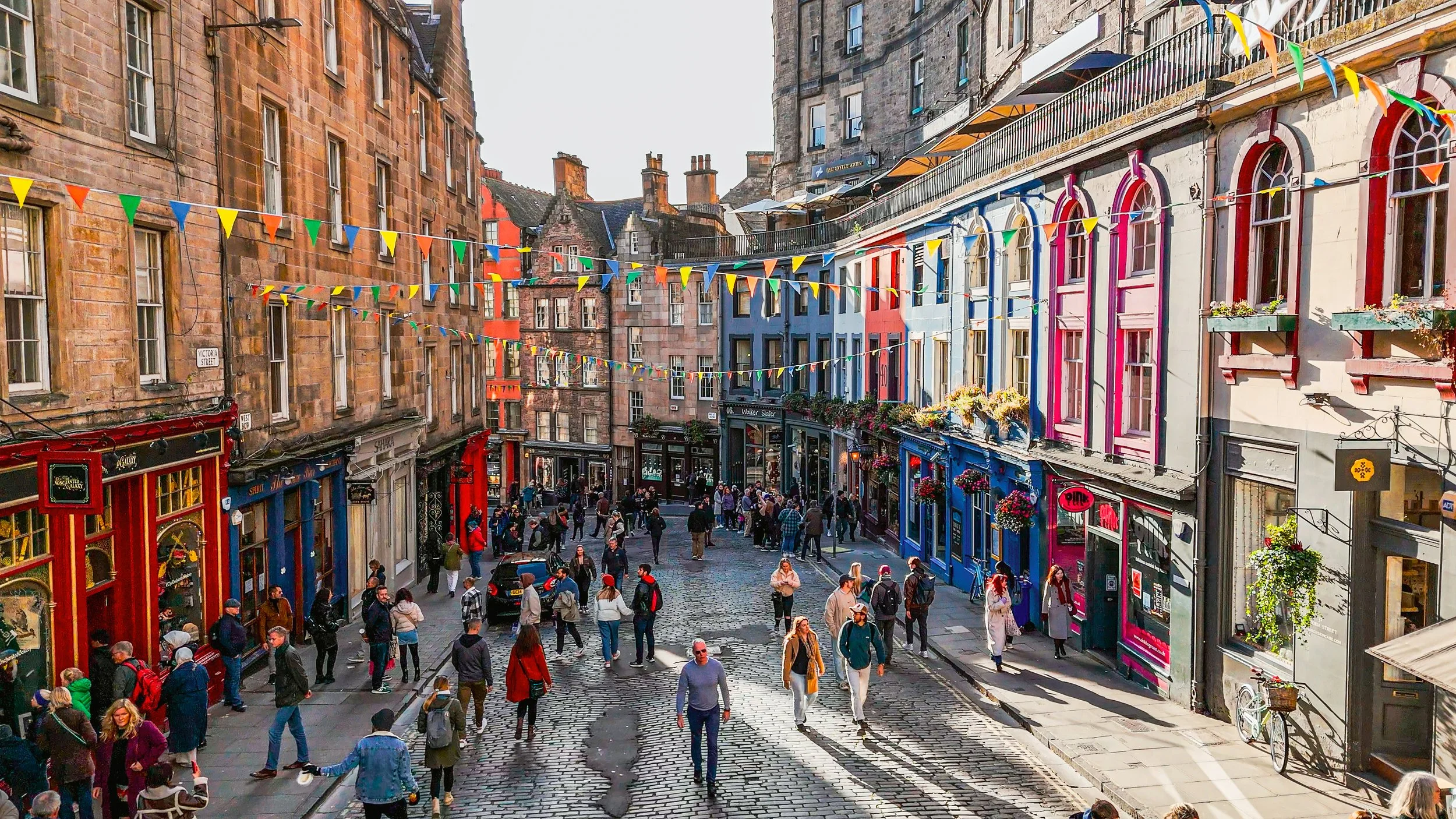
Edinburgh in Festival Season
Arrive with the festivals at full tilt. The Tattoo and two or three International Festival performances anchor the evenings, the Fringe fills the gaps, and the city does the rest.
After days of mountains and sea and long northern light, you arrive in Edinburgh at full volume, the finale you have been traveling toward all along. The fullest possible end to your journey through Scotland, as you turn for home.
PLANNING & TIMING
Pulling It All Together
What makes an August trip work is everything the route does not show: a table held for the night the schedule actually opens up, a guide who has driven the Trotternish in high season and knows it an hour before the coaches do, a room in a city that has none left. None of it comes off a list. It comes from the people we know.
August in Edinburgh books earlier than any other time of the year. The festival programme already flags the Berlin Philharmonic concerts as limited availability, and premier Tattoo seating goes the same way. A trip of this shape can still be put together well; the planning window is simply measured in weeks now rather than months.
The next step is to reach out to us to set up a call. Tell us what you want the month to feel like, and we will take it from there.